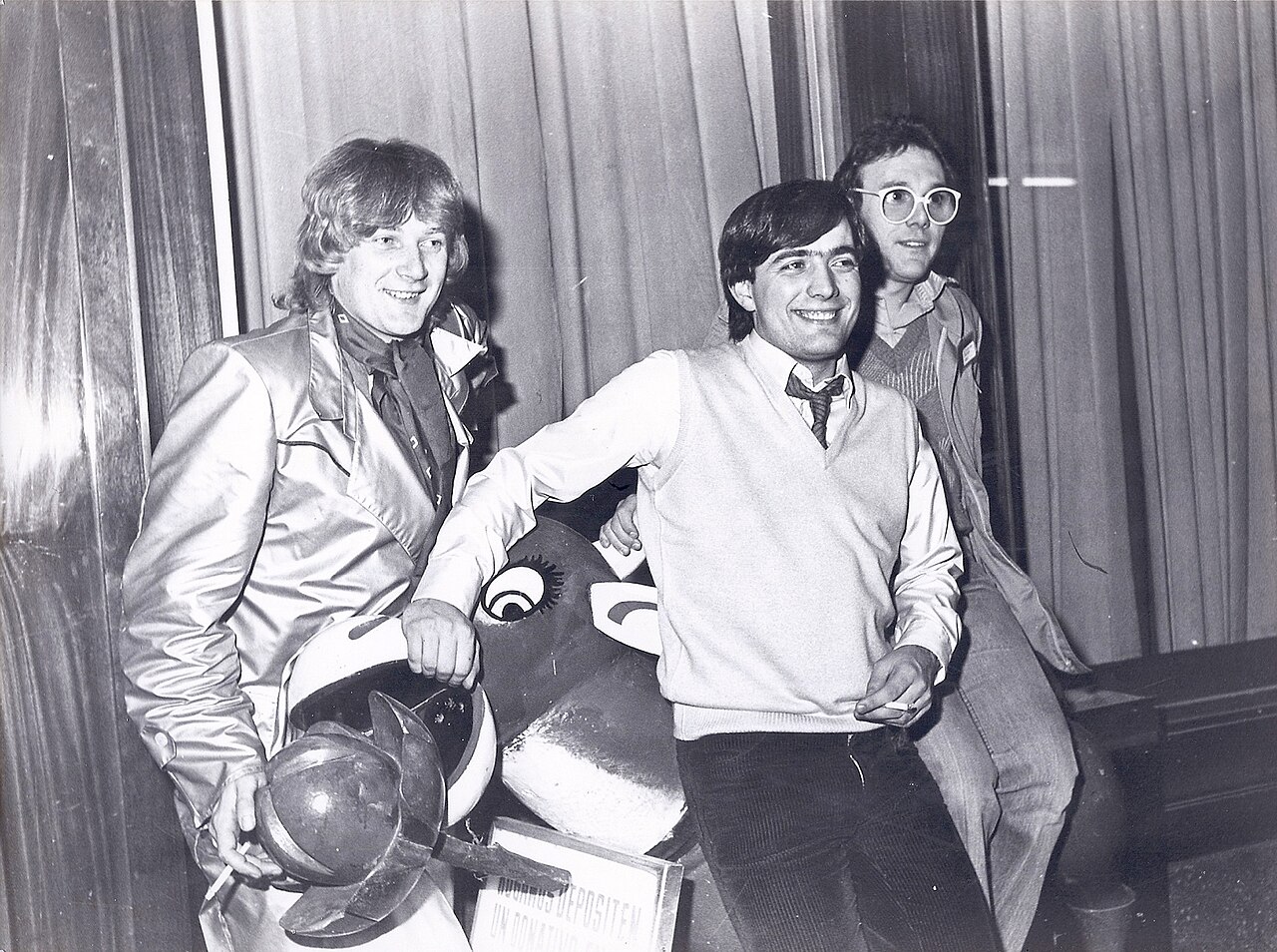
The Buggles' Anthem: Crafting a Media Revolution Sound
In the annals of pop culture, few songs encapsulate a pivotal moment in technological and artistic evolution quite like The Buggles' "Video Killed the Radio Star." Released on September 7, 1979, this new wave synth-pop anthem wasn't just a catchy tune; it was a prophetic lament, a meticulously crafted soundscape, and ultimately, an ironic catalyst for the very revolution it mourned. It spoke of a bygone era where the radio star reigned supreme, only to be dethroned by the burgeoning power of visual media. But how did this song come to be, and why does its legacy continue to resonate decades later?
The Birth of an Anthem: From Concept to Chart-Topper
The genesis of "Video Killed the Radio Star" traces back to the collaborative brilliance of Trevor Horn, Geoff Downes, and Bruce Woolley. Horn and Woolley began developing the core structure and melody in 1978, inspired by a shared fascination with science fiction and the rapidly changing media landscape. Authors like J.G. Ballard, whose dystopian visions often explored technology's impact on humanity, served as a poignant backdrop to their lyrical musings. The initial demo, featuring vocals by Tina Charles, was refined in Geoff Downes' Wimbledon Park flat, with Downes, a session keyboardist, contributing crucial keyboard elements that would define its polished, futuristic sound.
When The Buggles, comprising Horn and Downes, released their version as the lead single from their debut album, The Age of Plastic, they had transformed it into a synth-pop masterpiece. Recorded at Sarm East Studios in London and produced by Horn, the track was a marvel of innovative recording techniques for its time. Extensive vocal processing, including compression and echo effects, gave the vocals a distinctive, synthetic quality that perfectly matched the song's thematic content. Live drums by Paul Robinson were layered with an array of synthesizers, notably the Minimoog, creating a rich, textured sound that captured the late 1970s transition towards electronic music dominance. Backing vocals from Debi Doss and Linda Jardim added further depth to this sonic tapestry.
The song's prescient message, coupled with its undeniable hook, quickly propelled it to international success. It topped the UK Singles Chart for a week in October 1979 and reached number one in 16 countries worldwide, solidifying The Buggles' status as a formidable force in the new wave movement. While it peaked at a more modest number 40 on the US Billboard Hot 100, its impact there would prove far more significant.
When Video Met Radio: MTV's Defining Moment
The true apotheosis of "Video Killed the Radio Star" came not on the radio waves, but on television screens. At precisely 12:01 a.m. on August 1, 1981, a new cable channel dedicated entirely to music launched in the United States. Its very first broadcast was the music video for The Buggles' anthem. Directed by Russell Mulcahy and produced on a budget of $50,000, the video became an iconic symbol of MTV's launch, epitomizing the advent of music videos as a dominant format in popular music consumption.
The irony was palpable and profound: a song whose lyrics lamented the obsolescence of the radio star in favor of emerging visual technologies was, itself, the very vessel that launched and legitimized the music video era. This moment wasn't just a television premiere; it was a cultural watershed. It signaled a seismic shift in the music industry, where visual presentation became as crucial as, if not more important than, the audio itself. Artists who could produce compelling videos were prioritized, and the landscape of musical stardom irrevocably changed. MTV's debut, spearheaded by The Buggles' track, foreshadowed the digital era's media disruptions, where content would increasingly be consumed through a multimedia lens.
To delve deeper into this iconic moment and its lasting effects, consider exploring Video Killed the Radio Star: MTV's Launch Legacy.
Decoding the "Radio Star": A Cultural Commentary
The phrase "radio star" in The Buggles' song is laden with meaning, moving beyond a simple occupational title. It evokes a romanticized image of performers whose charisma and talent were conveyed solely through sound. These were artists whose voices filled living rooms, creating intimate connections with listeners who had to conjure their own visuals. The song mourns the loss of this unique relationship, suggesting that the purity of auditory imagination was being usurped by the dictates of the camera.
Interestingly, the term "radio star" has another, more scientific definition. As Merriam-Webster notes, its first known use in 1948 referred to "a cosmic radio source, especially a point source of radio emissions." This scientific interpretation, while distinct from the song's cultural context, highlights how language evolves and adapts to technological advancements. In a cosmic sense, a "radio star" emits signals that are perceived only through specific receptors, much like the original radio performer's essence was perceived only through audio. The Buggles' song, however, redefined the term for popular culture, infusing it with a sense of nostalgia and technological anxiety.
The song's enduring appeal lies in its commentary on technological evolution and its impact on human experience. It asks us to consider what we gain and what we lose when new media forms emerge. Are we simply replacing old forms with new, or are we fundamentally altering how we connect with art and artists? The lament of the "radio star" resonates because it touches upon the universal human experience of grappling with change, of valuing tradition while embracing innovation.
For a deeper dive into the multifaceted interpretations of this term, read Radio Star Defined: From Cosmic Source to Pop Culture Icon.
The Buggles' Legacy and Beyond
Despite the monumental impact of "Video Killed the Radio Star," The Buggles themselves had a relatively brief tenure as a performing act, releasing only two albums before disbanding. However, their story is far from over. Trevor Horn went on to become one of the most renowned and influential record producers in music history, shaping the sound of countless artists, including Yes, Frankie Goes to Hollywood, Seal, and t.A.T.u. His meticulous approach to production and innovative use of technology, honed during his time with The Buggles, became his signature, further cementing his legacy as a true pioneer.
The song itself has endured as a cultural touchstone. Its catchy melody and poignant lyrics have led to numerous covers by artists like The Presidents of the United States of America, and it has been sampled in various modern media, ensuring its continued presence in the global consciousness. Its commentary on the intersection of technology and art remains as relevant today as it was in 1979. In an age dominated by streaming video, social media influencers, and virtual reality, the anxieties and transformations discussed in "Video Killed the Radio Star" continue to unfold, making it an ever-prescient piece of cultural commentary.
The Buggles' anthem wasn't just a hit song; it was a blueprint for the future. It reminded us that while technology constantly reshapes our world, the core human desire for connection through art remains constant, even as the medium for that connection evolves from the lone voice of the radio star to the visual spectacle of the digital age.
In essence, "Video Killed the Radio Star" is more than just a song; it's a historical marker, a piece of musical foresight, and a testament to the power of art to both reflect and influence technological change. It stands as a vibrant, echoing reminder of a media revolution, one that continues to shape how we consume and create today.